
Beneficiary Designations
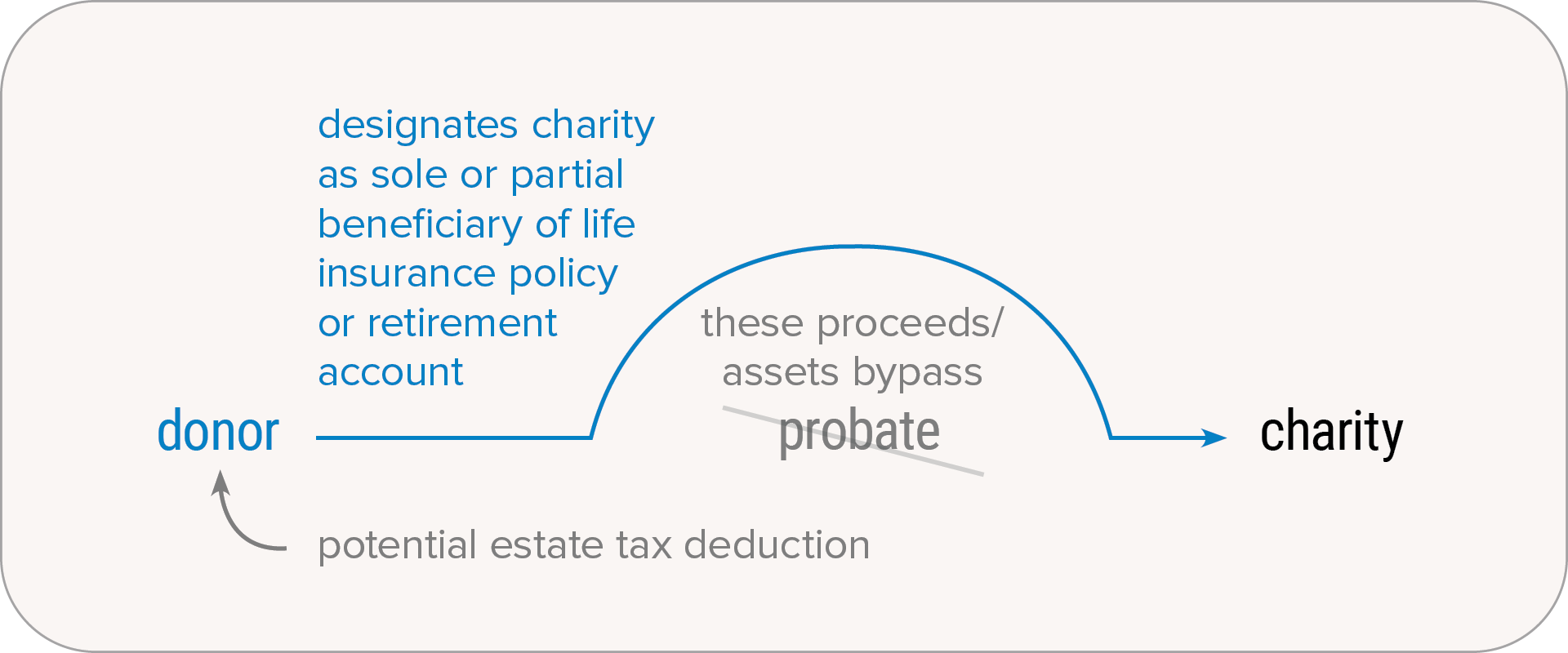
With a charitable beneficiary designation, you can make a simple future gift that costs you nothing today.
You may find that creating a gift you can change if you need to is a comfortable, powerful way to make a meaningful gift while keeping control of the gift property for life. The following assets can pass directly by beneficiary designation and not under your will:
- Life insurance policies
- IRAs and other retirement accounts
- Donor-advised funds (allowable for some DAFs, but not all)
- Bank accounts (through a payable-on-death or POD designation)
- Stock and mutual fund shares (through a transfer-on-death or TOD designation)
- Real estate (through a transfer-on-death or TOD designation, allowable in more than half of US states)
Why leave retirement assets to charity?
Retirement account assets left to heirs are highly taxed—once in the estate and again as income to the beneficiaries. On the other hand, stocks, bonds, mutual funds, and real estate are not subject to income tax when they transfer to heirs. For example, if you name Arden Wood as a charitable beneficiary of your retirement account, then 100% of those assets come to Arden Wood because no tax is in effect. But if you leave the account to an individual, the family gets far less—in some cases as little as 20% of the assets go to heirs after state tax and income tax. By using IRA assets to make charitable gifts and leaving other assets to family members, you minimize the tax burden on your heirs, leaving more to your intended beneficiaries while meeting your charitable goals.
A charitable beneficiary designation works like this:
- You name Arden Wood to receive the remaining assets or proceeds at the time of your passing. You can do this at the time you purchase the asset or set up the fund or account, or you can easily create or change beneficiary designations using a Change of Beneficiary form.
- You can choose to name Arden Wood as the sole beneficiary, a percentage beneficiary (along with one or more heirs or other charitable beneficiaries), or a contingent beneficiary (to receive the assets only if the primary beneficiary cannot).
- Arden Wood has no rights to the asset/fund/account during your lifetime—we will only receive assets at the time of your passing.
- The beneficiary designation is revocable, meaning you can remove or change it at any point during your life.
- Some financial accounts or assets typically pass by will but can pass directly to a named beneficiary if you opt to complete a form to set up a payable-on-death (POD) or transfer-on-death (TOD) designation.
Your will controls most property, but not all.
If you would like to make a similarly easy, flexible, revocable gift of other assets not named here, consider making a gift in your will.
Evaluate the fit.
A charitable beneficiary designation may be a particularly good option to consider if you:
- Want to make a substantial gift but don’t want to commit the assets right now.
- Want the ability to continue to use the assets during your lifetime.
- Want the peace of mind that comes from knowing you can change the size of the gift (or revoke your gift) if your needs or goals change.
See how it works.
Years ago, when David’s wife passed on, he filed a Change of Beneficiary form on his life insurance policy, making his two grown children the primary beneficiaries and Arden Wood a contingent beneficiary (to receive the proceeds only if his children could not). Now, both children are married with families of their own and are doing well financially. David plans to leave other assets to them, so he makes Arden Wood the sole beneficiary of his life insurance policy. This allows him to meet his charitable goals while still retaining all his assets for use during retirement. In addition, he knows that if his situation changes, he can easily make another beneficiary change.
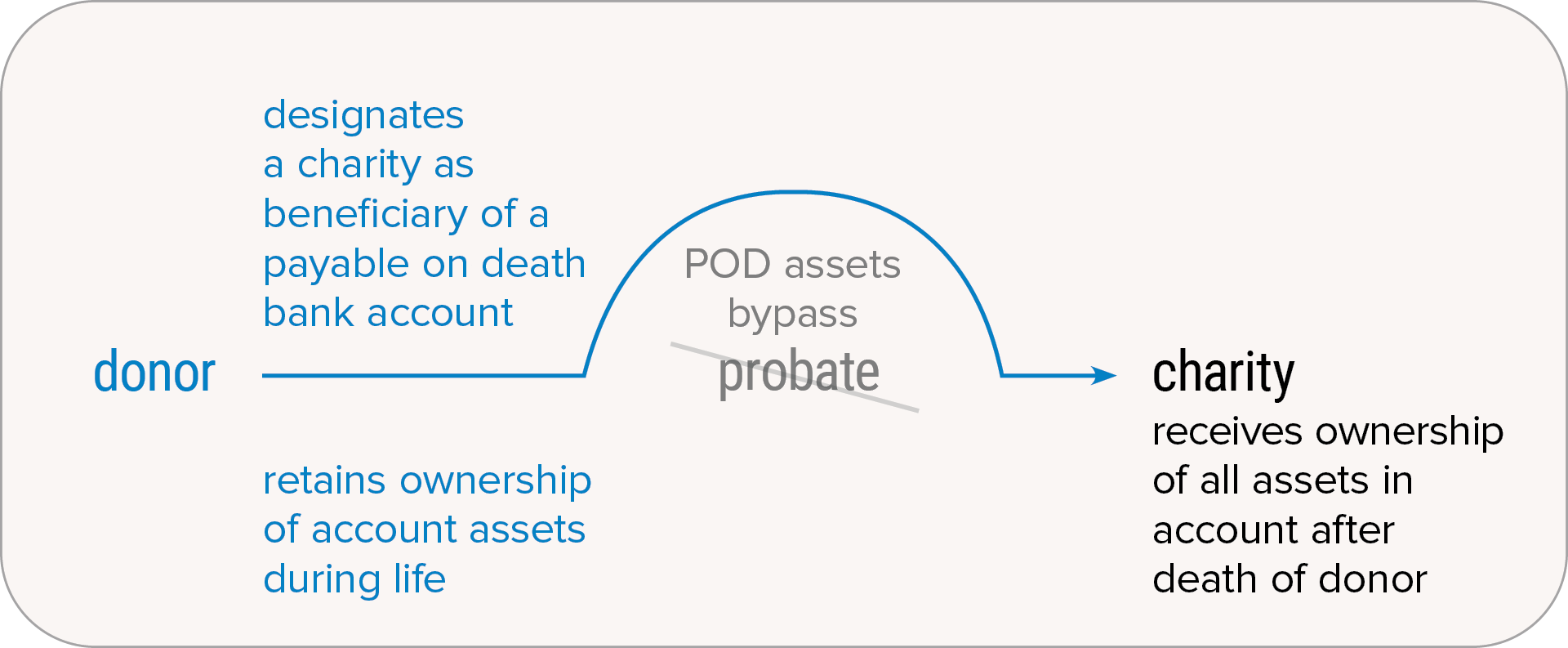
Jeanne adds a POD designation to her checking account and names Arden Wood as the beneficiary. She retains complete control of the account and can change the beneficiary designation again at any time during her life. While the FDIC insures her other accounts and CDs at the same bank, for a combined total of $250,000, her POD account has its own $250,000 coverage. At Jeanne’s passing, Arden Wood must provide a certified copy of her death certificate to claim the funds that remain in the account, which will then pass directly from the bank to us without going through probate.
Consider your timing.
It’s a good idea to regularly review your beneficiary designations. Since a charitable beneficiary designation does not qualify for a charitable income tax deduction, you can plan or change this gift at any time that is convenient for you.
We can help.
Request our Revocable Gifts brochure for more information about this gift option. If you have already named Arden Wood as the beneficiary of an asset or account, please let us know.
We appreciate you including Arden Wood in your planning.
Using a beneficiary designation to make a gift to Arden Wood qualifies you for membership in the Legacy Circle. This is our way to thank you for supporting our future as you plan for yours. Read more about the Legacy Circle.